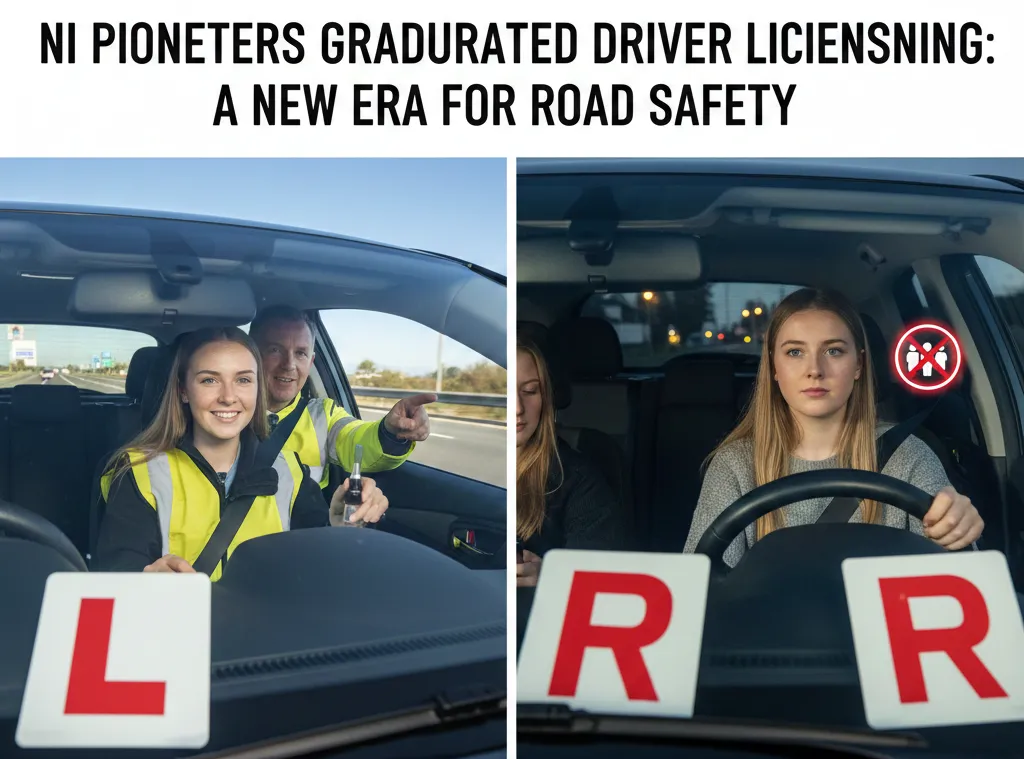
Northern Ireland is set to become the first part of the UK to introduce Graduated Driving Licensing (GDL), bringing major changes for learner and newly qualified drivers from 1 October 2026.
The reforms have been described by Infrastructure Minister Liz Kimmins as the most significant update to driver licensing and testing in almost 70 years, with a strong focus on improving road safety for young and inexperienced drivers.
A Graduated Driving Licence is a road safety system designed to reduce serious and fatal crashes involving new drivers. It works by introducing a structured learning period followed by temporary restrictions after passing the driving test.
The system is widely used in other countries and is proven to lower collision rates among young drivers.
If the proposals are implemented as planned, the new GDL system will include:

Road safety figures show why these changes are being prioritised:
According to the Infrastructure Minister, these statistics highlight the need for a system that better prepares young drivers for real-world driving conditions.
The GDL framework is designed not only to improve driving skills but also to address human factors such as:
The aim is to create drivers who are not just test-ready, but road-ready.
The target introduction date is 1 October 2026, and a public road safety awareness campaign is expected to launch ahead of the rollout.
At JNDS Online, we will continue to track these changes and guide learner drivers through any future updates that may affect driving lessons, testing, or newly qualified drivers across the UK.
Source Reference: Original reporting by ITV News/UTV. For the full story, please visit: ITV News: NI first in UK to introduce graduated driving licences