
Everything You Need, Step by Step
Jump straight to the part of the process you're on.
How to Start Learning to Drive in Durham
Do these in order. Doing them out of sequence is one of the commonest ways learners lose time and money.
- Apply for your provisional driving licence.
- Decide between manual and automatic.
- Book lessons with a DVSA-approved instructor.
- Start theory revision alongside your first lessons.
- Book and pass your theory test.
- Book your practical test when your instructor agrees you're consistently ready.
You can only book the practical test once you've passed the theory test, so many learners begin revising within the first few weeks of lessons.
How JNDS Online Helps Learner Drivers
JNDS Online is a learner-driver education resource. It doesn't replace lessons with an instructor. It helps you understand the process and prepare between lessons.
- Theory test practice
- Online driving courses
- UK driving test centre information
- Route Buddy, a tool for practising routes
- Driving test FAQs
A message from John Nicholson, Founder
"One thing I have learned after more than 12 years working with learner drivers is that most people do not fail because they lack ability.
More often, they struggle because they feel overwhelmed by the process.
Every week I speak to learners who are unsure when to start revising for their theory test, when to book a practical test or how to judge whether they are making good progress.
Those questions are completely normal.
That is one of the reasons I built JNDS Online.
I wanted learners to have access to guidance that helps them understand the process from start to finish rather than trying to piece everything together themselves.
Whether you are preparing for your first lesson or working towards test day, our goal is to help you move forward with confidence."
John Nicholson, Founder of JNDS Online
About John Nicholson

Founder & CEO, JNDS Online
John Nicholson has more than 12 years' experience working with learner drivers. He built JNDS Online to give learners clear, step-by-step guidance, from the provisional licence through to test day.
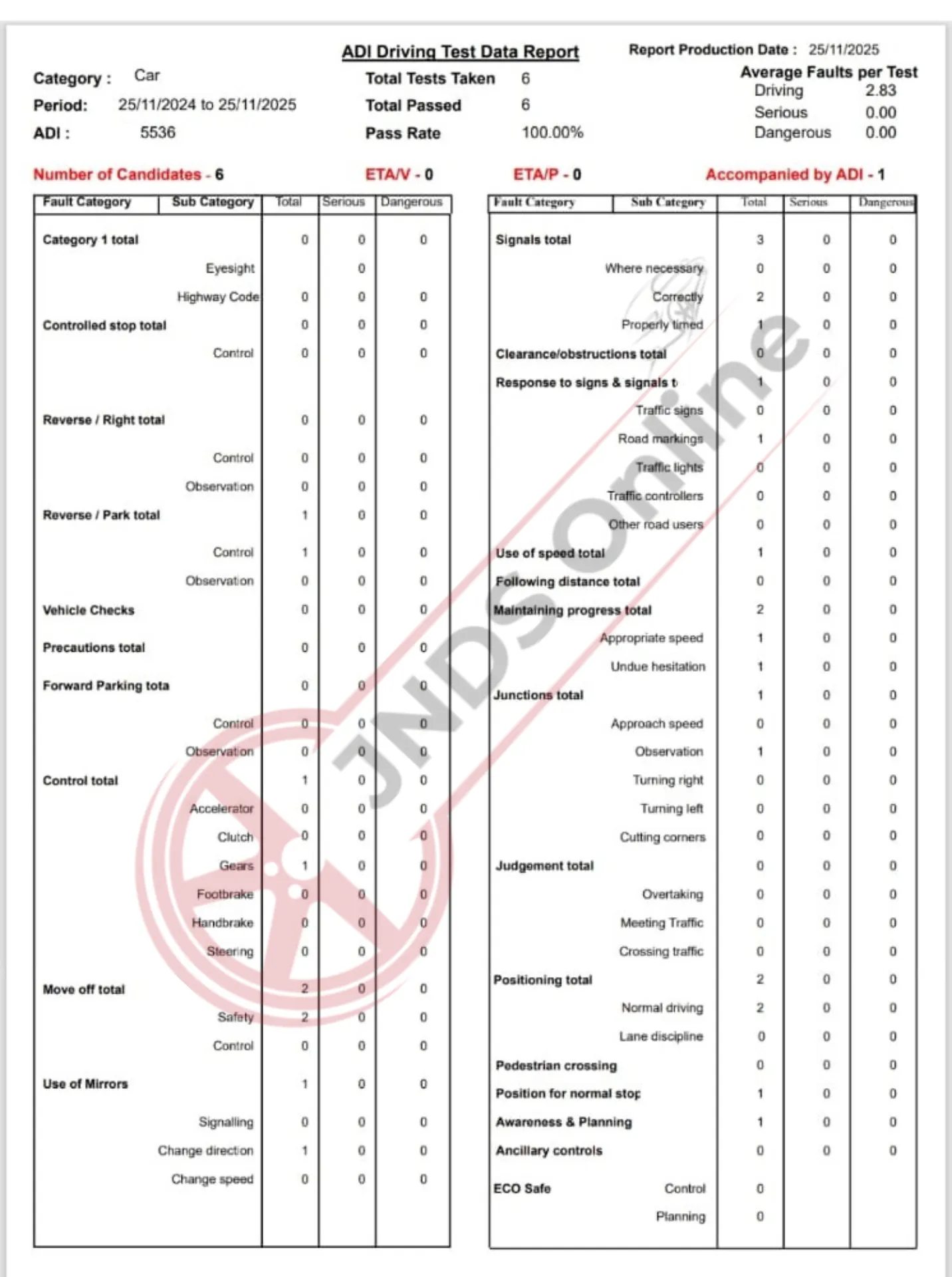
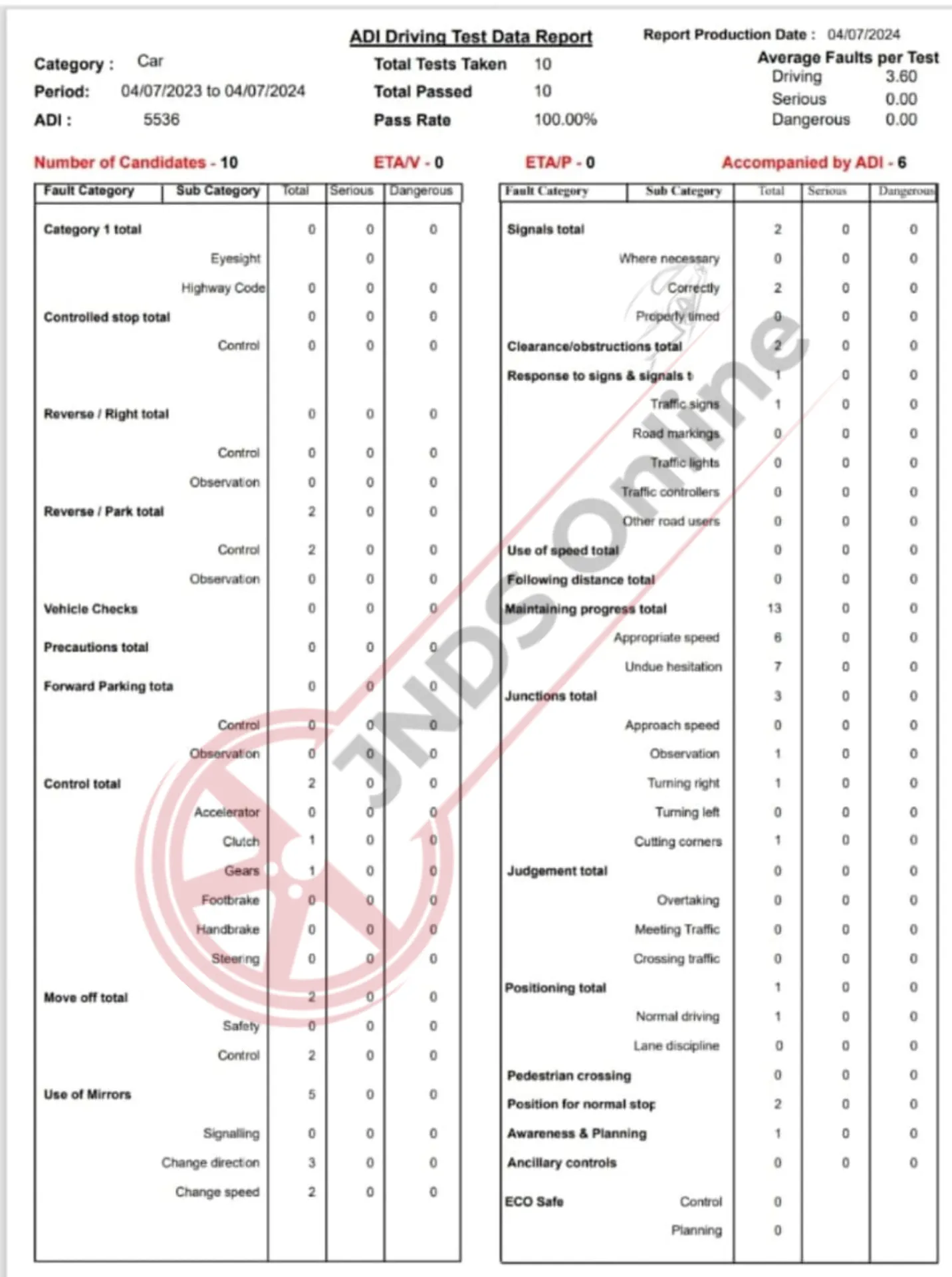
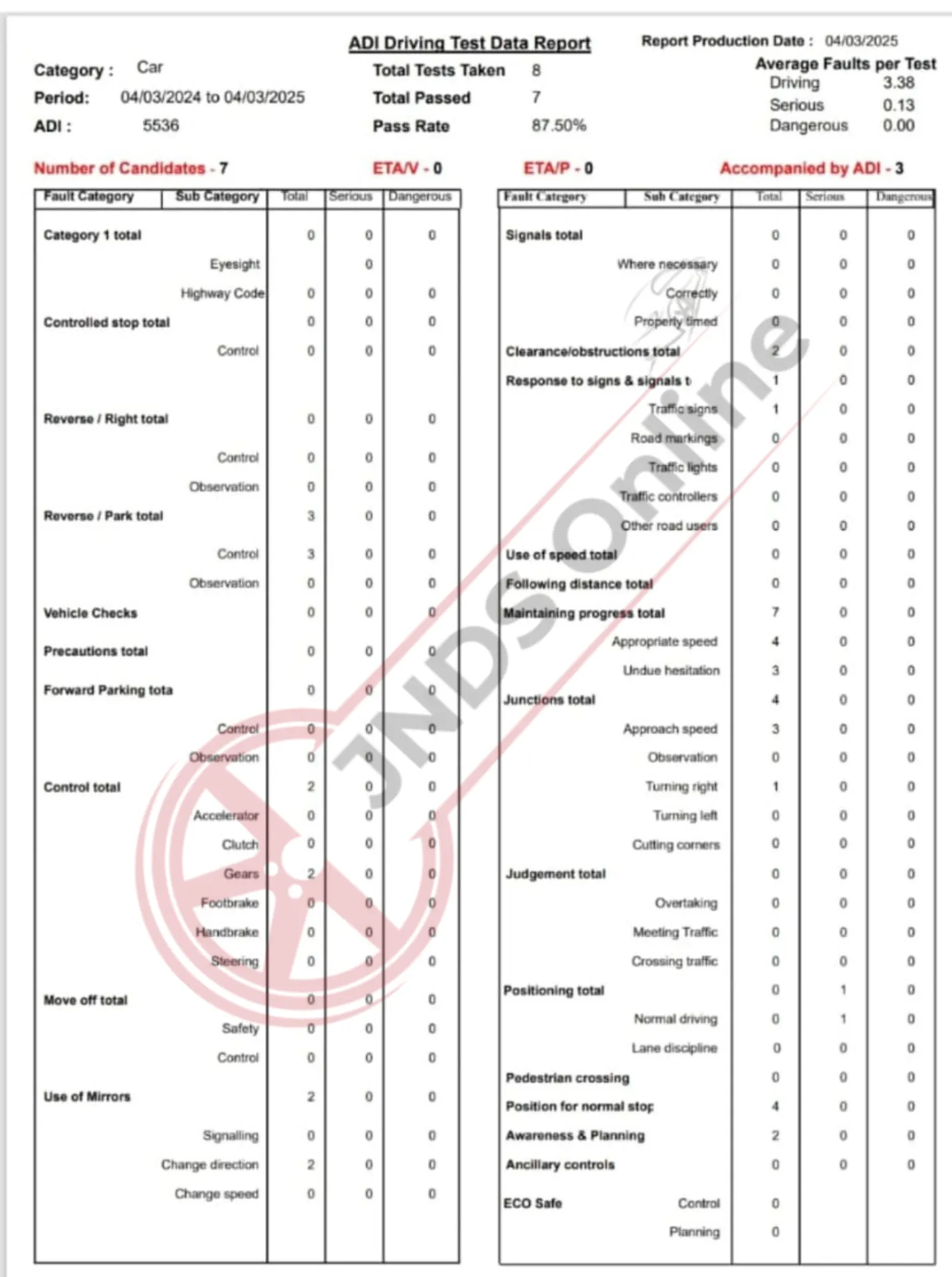
You can see his pass rate for his final two years in the job in the stats below.
See the pass ratePassing Rate & Stats
My pass rate for my final two years in the job, before I focused on JNDS Online.
Applying for Your Provisional Driving Licence
You need a provisional licence before your first lesson. You can apply online through GOV.UK from the age of 15 years and 9 months, although you can't drive a car on the road until you're 17 (with some exceptions).
You'll need:
- Proof of identity, such as a passport
- Your address history for the last three years
- Your National Insurance number, if you have one
Apply only through GOV.UK, because unofficial sites sometimes charge extra for the same form, and check the current fee before you pay. Declare any medical condition or eyesight problem that could affect your driving. Allow a couple of weeks before you plan to start lessons in case extra checks are needed.
Manual vs Automatic Driving Lessons in Durham
Neither choice is wrong. The right one depends on what you'll drive after you pass.
| Manual | Automatic | |
|---|---|---|
| Licence you get | Manual and automatic cars | Automatic cars only |
| What you learn | Clutch control, gears and road skills together | Road skills first, with no clutch or gear changes |
| Learning curve | Takes longer for many learners | Many learners feel confident sooner |
| Suits you if | You may drive a manual after passing, or want every option open | You'll mainly drive an automatic or electric car, or gears are putting you off |
Durham's hills are worth raising with an instructor. Hill starts are a bigger part of learning in a manual, so ask how they teach them. If you're unsure which to choose, ask a prospective instructor about both. A good one will give you an honest view of how each would suit you.
Choosing a DVSA-Approved Driving Instructor in Durham
In Great Britain, anyone who charges for driving lessons must be a DVSA-approved driving instructor (ADI) or a trainee on a licence. Check the badge in the windscreen: green means fully qualified ADI, pink means trainee licence holder.
Questions worth asking before you book:
- Are you a fully qualified ADI or a trainee?
- Do you teach manual, automatic or both?
- Where can you pick me up, such as home, college or work?
- How long are lessons, and how is progress tracked?
- What is your cancellation policy?
Choose someone you feel comfortable asking questions of. You'll learn faster if you aren't nervous about getting things wrong.
If you'd like to look at local lessons, John Nicholson Driving School has lesson information and booking enquiries on its Durham driving lessons page.
Your First Driving Lesson in Durham: What to Expect
Your first lesson is usually calmer than learners expect. If you're booking driving lessons for beginners, ask how the instructor structures a first lesson. Many start somewhere quiet rather than in traffic, and nobody expects you to know anything beforehand.
A typical first lesson covers setting up the car (seat, mirrors, seatbelt), what the main controls do, moving off, stopping and basic steering, and getting a feel for the car at low speed.
Bring your provisional licence (instructors normally ask to see it), glasses or contact lenses if you need them to drive, and comfortable, flat shoes. If you're nervous, say so. It helps your instructor pace the lesson.
How Many Driving Lessons Will You Need?
There's no set number, and anyone who promises one is guessing. DVSA research suggests learners typically need around 45 hours of professional lessons plus around 22 hours of private practice, but that is an average, not a target.
What tends to change the number:
- Starting point: previous experience, confidence and how quickly you pick up new skills
- Frequency: regular lessons help you retain what you've learnt, while long gaps mean relearning
- Extra practice: time in a suitable car with a supervising driver can reduce how many paid lessons you need
- Road conditions: busier or hillier areas can take longer to feel comfortable in
Don't compare your progress with friends'. Ask your instructor for an honest view of where you are.
Fitting Lessons Around Durham University, Work and Daily Life
Consistency usually matters more than speed. Learners who keep a regular rhythm tend to retain more between lessons than those who cram or stop and start.
For Durham University students
- Term-time timetables, essay deadlines and exams all affect how much you can commit. Be honest about when you'll have the energy to concentrate.
- Many students find a weekly lesson in term time, with more in the holidays, a realistic balance.
- If you live in college accommodation, agree a pick-up point with your instructor before the first lesson.
- If you plan to take your test back home, practise on those roads in the holidays too. Roads, junctions and traffic differ from one area to another.
For working learners
- Check whether evening or weekend slots are available before you commit.
- Shift patterns are easier to plan around if you book several lessons ahead.
Learning in Durham itself
The city centre has narrow, hilly streets and a lot of pedestrians, and traffic patterns change with university terms. A good instructor will build up your experience on a mix of quiet and busier roads, including roundabouts and faster roads outside the centre. If weekly lessons don't fit your timetable, ask whether a more concentrated block might suit you.
Driving Theory Test Preparation
Explore structured online course prep →
The theory test has two parts, taken in one sitting:
- Multiple-choice questions. 50 questions, and you need 43 or more to pass.
- Hazard perception. 14 video clips in which you click as hazards develop. The pass mark is 44 out of 75.
You must pass both parts in the same sitting. If you fail one, you retake both. You need your provisional licence to book, and you should book only through GOV.UK. Your pass certificate is valid for two years, so make sure your practical test is realistically achievable within that time.
Start revising as soon as lessons begin. What you learn in the car and in revision reinforce each other, because rules about junctions, speed limits and road signs make more sense once you've met them in real traffic.
- Read the Highway Code, which is free on GOV.UK.
- Practise questions little and often, whether that's between lectures or after a shift.
- Practise hazard perception clips separately. It's a skill, not just knowledge.
- Review the questions you get wrong and work out why, rather than memorising answers.
Practise with JNDS Online's driving theory test practice resources before you book your test.
Practical Driving Test Preparation
Practise Darlington routes with RouteBuddy →
What happens on the test
The practical test lasts around 40 minutes and covers:
- An eyesight check: reading a number plate from a set distance
- "Show me, tell me" vehicle safety questions
- General driving ability on a range of roads
- A reversing manoeuvre
- Independent driving: about 20 minutes of following sat nav directions or road signs
You can make up to 15 driving faults (minors) and still pass. A single serious or dangerous fault means a fail. Bring your photocard driving licence and your theory test pass details.
Driving test tips for beginners
- Treat a mock test as your benchmark. Ask your instructor for one before you book.
- Practise on varied roads. Test routes vary, so aim for a mix of quiet and busy roads rather than memorising one route.
- Practise independent driving. Get used to following sat nav or road signs while still driving safely.
- Learn the safety questions. They come from a published list, so you can prepare for them.
- Make your manoeuvres reliable. Once is not enough. Aim for consistent.
- Keep going after a mistake. One minor fault doesn't fail you. Dwelling on it often causes the next one.
- Arrive early and rested. If you're unsure what the examiner asked, ask them to repeat it.
For test centre information, read JNDS Online's UK driving test centres guide, and use Route Buddy to practise routes.
How to Know You're Ready for Test Day
A date in the diary isn't a readiness check. Signs you may be ready:
- You drive without much help or prompting from your instructor
- You deal with unfamiliar roads and junctions calmly
- You complete the manoeuvres consistently, not just occasionally
- Your mistakes tend to be small and self-corrected
- Your instructor agrees, and ideally you've completed a mock test
Be honest about the difference between "I managed it once" and "I do this reliably." Booking early and hoping to improve before the date is one of the most common reasons for an avoidable fail.
Common Learner Driver Mistakes to Avoid
- Leaving theory revision until the end. You need to pass the theory test before you can book the practical, so delays here hold up everything else.
- Booking the practical test too early. Waiting times change, so check current availability on GOV.UK rather than assuming.
- Relying on friends' advice over structured instruction. Well-meant tips can contradict what your instructor is teaching.
- Stopping and starting. Long gaps mean spending the first lessons relearning.
- Practising privately without proper insurance. If you drive a friend's or family member's car, you need appropriate insurance, L plates and a supervisor who is at least 21 and has held a full licence for at least three years.
- Not asking questions. If you're unsure, say so. Nobody expects a learner to know everything.
Keep Learning Between Lessons
Resources from JNDS Online to support your preparation.
What People Say About John
Over 100 genuine Google reviews from real pupils in Darlington and surrounding areas.
John is not only a good professional instructor but also an amazing person. He helped on very short notice with the test routes and mock test I passed with only 1 minor.
When I moved to Darlington, John not only helped me improve my driving skills but was extremely patient helping me overcome my anxiety and fear of driving.
John was a fantastic instructor, he taught me absolutely everything to get test ready and helped me get my test date early. Could not recommend him enough.
John was very helpful inside and out the car. He made me feel comfortable as I had not driven for almost 9 months. Can't thank him enough.
John was super helpful throughout the process and gave great advice. Would highly recommend to anyone looking for driving lessons in Darlington.
JNDS gave me a huge advantage. When my instructor taught me MSPSL I already understood what it meant from John's online courses. It genuinely made a difference.
John is not only a good professional instructor but also an amazing person. He helped on very short notice I passed with only 1 minor.
John not only helped me improve my driving skills but was extremely patient helping me overcome my anxiety and fear of driving.
John helped me get my licence before my theory test ran out. Practising the actual test routes with John made all the difference.
John is a patient and informative driving instructor helping my daughter learn. The route practice and mock tests really built her confidence.
JNDS is an amazing help. Their driving courses and tips helped me get my driving license in the UK. Thanks John, now I drive with confidence.
When I moved to the UK from the USA the hardest part was adapting to UK roads. John's international driving course was the right choice really glad I found him.
John helped me get my licence before my theory test ran out. The route practice was brilliant — found a test in time!
John is a patient and informative instructor. The route practice saved months of wasted lesson time. Brilliant all round.
Ready to Practise the Routes?
Do not leave your test to chance. Learn every Darlington route with RouteBuddy, then back it up with structured online course prep.
Frequently Asked Questions
How do I start learning to drive in Durham?
Apply for your provisional licence on GOV.UK, then book lessons with a DVSA-approved instructor and start theory revision at the same time.
Do I need a provisional licence before lessons?
Yes. You need one before your first lesson, and before you can book your theory test.
Should I choose manual or automatic lessons?
It depends on what you'll drive afterwards. A manual pass lets you drive both types of car. An automatic pass limits you to automatics, but many learners find automatics quicker to learn.
How many lessons might I need?
It varies a lot. DVSA research suggests an average of around 45 hours of professional lessons plus around 22 hours of private practice, but that is an average, not a target. Your instructor can give you a realistic view.
When should I start theory test revision?
As early as you can, ideally when lessons start. It reinforces what you learn in the car and avoids a delay when you're ready to book your practical test.
Can I learn while studying at Durham University?
Yes. Many students do. A steady weekly pattern in term time, with extra lessons in holidays, works for many people. Talk to your instructor early about your timetable.
How do I know I'm ready for my practical test?
You drive consistently with little prompting, handle unfamiliar roads calmly, and your instructor agrees. A mock test is a useful check.
Where can I find a driving instructor in Durham?
Look for a DVSA-approved instructor (green badge) or a trainee (pink badge), and ask the questions listed under choosing an instructor above. Recommendations from friends or fellow students can help too.
Find John in Darlington
32A Larchfield St, Darlington DL3 7DH, United Kingdom
Open in Google Maps and get directions