
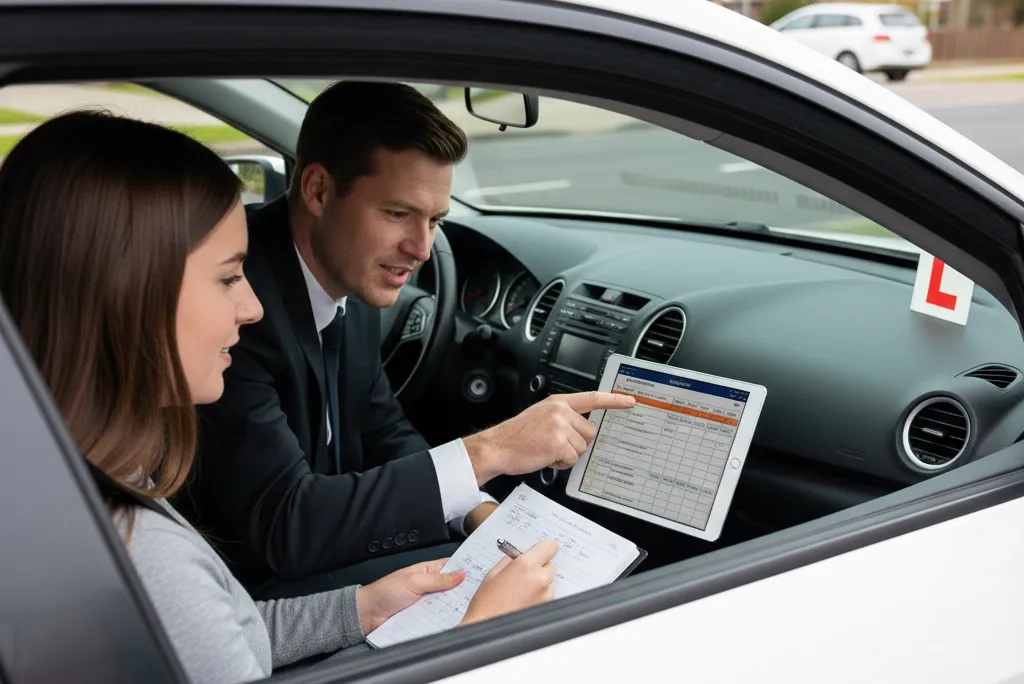
While every student is different, data from the DVSA and expert instructors suggest that 2 to 4 hours of professional instruction per week is the "sweet spot" for most learners.
Ideal for busy students or professionals. This allows you to digest new information without feeling overwhelmed while maintaining a steady rhythm.
If you are on a tight deadline, an intensive or "crash course" might work. However, ensure you include breaks for mental rest to avoid "driver fatigue."
Best for those who want to pass their driving test quickly. Taking two 2-hour sessions per week leads to much higher retention and faster skill development.
When you take driving lessons irregularly, your brain and muscle memory suffer. To become a safe, confident driver, you need to build momentum.
The Benefits of Consistent Driving Lessons:
Builds Muscle Memory: Regular practice makes car control (clutch control, steering, and braking) feel like second nature.
Boosts Confidence: Frequent time behind the wheel reduces anxiety and builds road awareness.
Faster Progression: Learners who stick to a schedule often require fewer total hours to reach test standard, saving money in the long run.
Immediate Feedback: Regular sessions allow your instructor to correct mistakes before they become bad habits.
You can get all the driving test routes in one place "Test Routes App"
Research shows that two-hour lessons are often more effective than one-hour slots, as they provide more time to get out of heavy traffic and into varied road types.
The frequency of your driving lessons directly impacts your success rate. For the best results, aim for 2-4 hours of lessons per week. This ensures you stay sharp, confident, and ready for your practical driving test.
Ready to start your journey? Explore and Book Your Driving Lessons Today and get on the fast track to driving independence!
Or for your ease you can use the Routes App (Recommended)
To get the most out of your tuition, follow this result-oriented checklist:
Set a Fixed Schedule: Treat your lessons like an appointment (e.g., every Tuesday and Thursday).
Track Your Progress: Keep a logbook of maneuvers like parallel parking, emergency stops, and roundabouts.
Avoid Long Gaps: Any break longer than 7 days can cause your skills to "rust," requiring you to spend the first 20 minutes of your next lesson just catching up.
Mock Driving Tests: Frequently ask your instructor for an assessment to see if you are "test ready."

You don't have to be in the driver’s seat to keep learning. High-achieving students often engage in "passive learning" to ensure that when they get back in the car, they aren't wasting time recapping old material.
Study the Highway Code: Understanding road signs and right-of-way rules at home means you spend less time parked on the side of the road discussing theory and more time actually driving.
Private Practice: If possible, spend 1–2 hours a week practicing basic car control with a family member in a quiet area. This allows your JNDS instructor to focus on advanced skills rather than just gear changes.
Reflective Logs: Spend 5 minutes after each lesson writing down what went well and what felt difficult. Bringing these notes to your next session helps your instructor tailor the lesson specifically to your needs.
Taking 4+ lessons a week can be effective, but only if your mind is sharp. Learning to drive is mentally taxing; "overloading" can lead to a plateau where you stop improving or start making simple mistakes.
The Power of Rest: Ensure you are well-rested before a lesson. Fatigue slows your reaction times and makes it harder to process your instructor's feedback.
Mindfulness & Calm: If you feel anxious, practice deep breathing before starting the engine. A calm mind processes hazards much faster than a panicked one.
Nutrition and Hydration: Low blood sugar can cause a "mental fog." A light snack and staying hydrated before your session can significantly improve your focus during complex junctions.
Set Realistic Milestones: Don't obsess over the final test date. Focus on mastering one skill at a time (e.g., "Today I will master hill starts"). This reduces pressure and makes each lesson feel like a win.
How many driving lessons do I need to pass?
On average, the DVSA suggests 45 hours of professional tuition combined with 22 hours of private practice.
Can I learn to drive in a month?
Yes, through an intensive driving course, but consistent weekly lessons usually produce safer, more observant drivers.
Is it better to take one long lesson or several short ones?
Two-hour lessons once or twice a week are generally more effective for retention than a single one-hour session.
Should I practice between lessons?
Absolutely. Private practice helps reinforce the technical skills taught by your JNDS instructor.